

BREAKTHROUGHS TO SCALE: WHAT I HEARD AT THE ALZHEIMER’S ASSOCIATION SOUTHEAST TERRITORY UPDATE
“Dr. Erik, is anything actually changing with Alzheimer’s?”
Families ask me this all the time.
They have watched a parent forget their name.
They have sat in waiting rooms for answers that never came.
And for a long time, the honest answer felt like: not fast enough.
So I want to tell you what I heard recently, because it changed the way I answer that question.
I joined the Alzheimer’s Association’s Southeast Territory Update, with Dr. Joanne Pike, President and CEO of the Alzheimer’s Association, and Donna McCullough, the Association’s Chief Operating Officer.
And one sentence from Dr. Pike stayed with me the whole day:
“We are doing as a cause and as an organization, in five years, what cancer did in 50.”
My name is Dr. Erik Ilyayev. I’m a dementia care physician, a board member of the South Florida Alzheimer's Association®, and the CEO of MedBetterHealth.org — one of the organizations selected by Medicare to participate in the GUIDE Model, an 8-year CMS initiative supporting people living with dementia and the family caregivers caring for them at home.
In this issue, I want to share the incredible things I heard, what they mean for your family, and what I want you to do with them.
A DECADE OF PROMISES KEPT
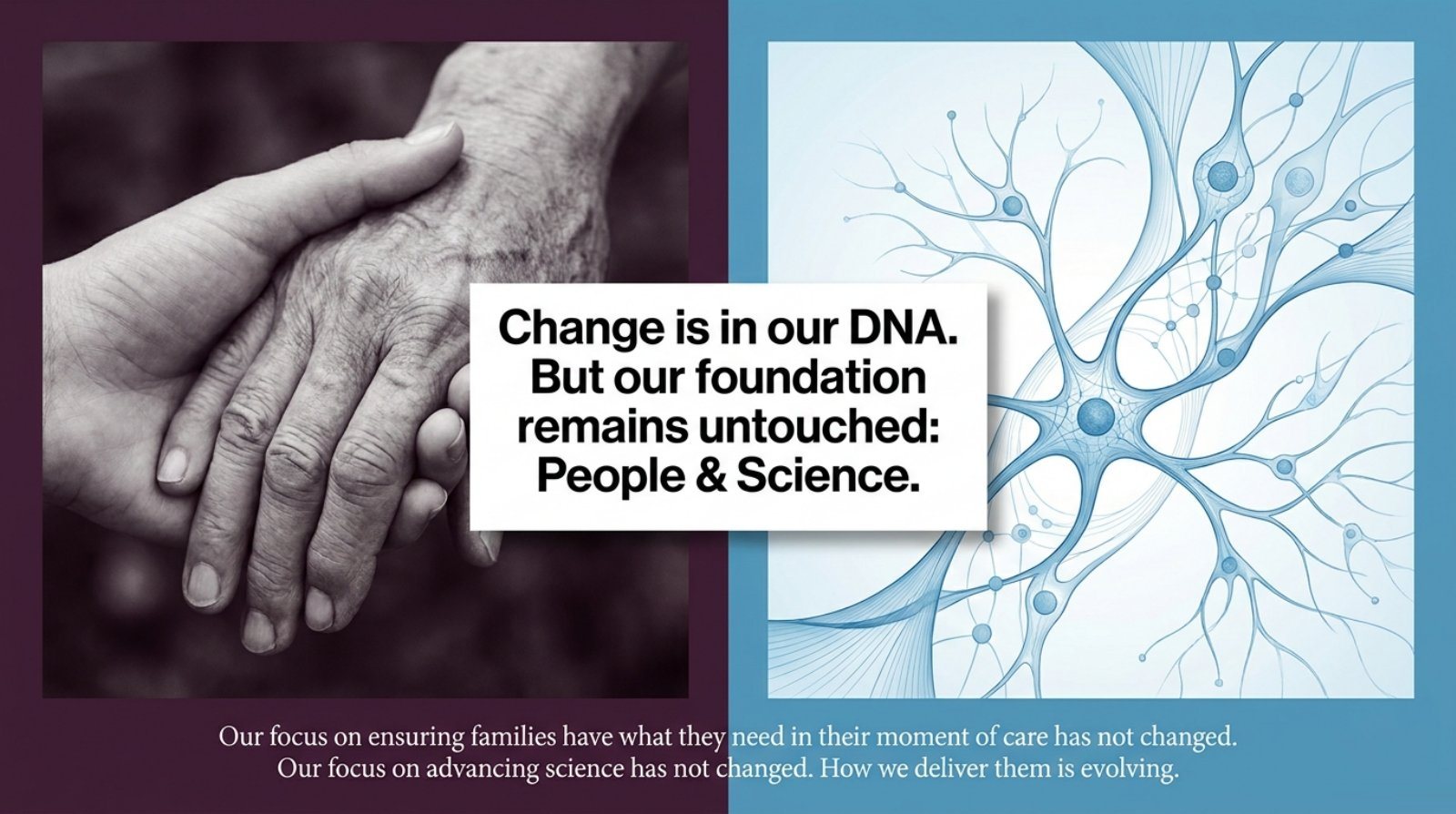
Dr. Pike started by looking back.
Around 2014, the Alzheimer’s Association set a 10-year vision with some very audacious goals.
That decade ended with the Association’s 2025 fiscal year.
And Dr. Pike shared that they achieved every single one of those goals.
Here are a few of the numbers she shared:
- Federal Alzheimer’s research funding was around $500 million when they started. It ended that 10-year vision at $3.8 billion.
- The Association’s own research grants grew from about $20 million a year to a total research spend of around $112.5 million.
- Through their work with health systems, 22.9 million people were reached with quality dementia care.
- Walk to End Alzheimer’s raised $112.4 million in that last year alone.
- And one of the biggest goals of that vision was a treatment. They ended the decade with not one, but two.
Dr. Pike was very clear about where that federal funding came from.
She called it “a direct result of our advocacy and all of you.”
Volunteers. Advocates. Families who picked up the phone and called Congress.
That matters, because it means this progress was not handed to us.
People fought for it.
FIVE YEARS VS. FIFTY YEARS
Then Dr. Pike compared Alzheimer’s to cancer.
She walked through the cancer timeline:
- 1949: the first chemotherapy was approved.
- 1971: the National Cancer Act started federal progress against cancer.
- 1976: the American Cancer Society began recommending routine mammograms.
- 1990: the first decline in breast cancer deaths.
Decades, from the first treatment to the first real drop in deaths.
Then she looked at Alzheimer’s.
She described progress in the last five years so fast that she said she cannot think of another disease that has moved this quickly.
That is where her line came from:
In five years, what cancer did in 50.
I have been in dementia care for a long time.
I do not say this lightly.
The pace has changed.
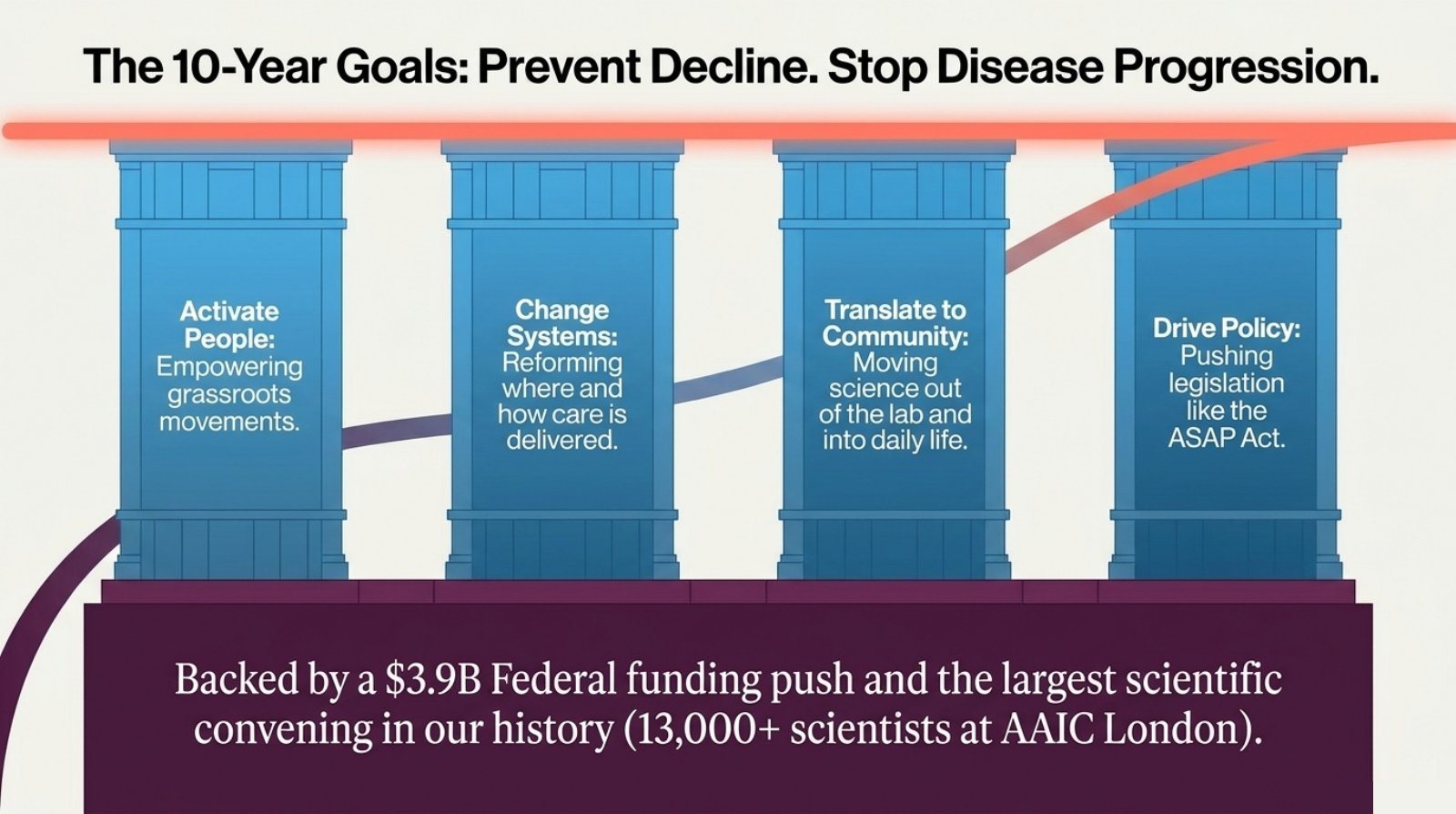
THE NEW 10-YEAR VISION: PREVENT DECLINE. STOP PROGRESSION.
So what comes next?
Dr. Pike shared the Association’s new 10-year vision, and it is big.
Prevent decline.
Stop disease progression.
Ten years ago, people were afraid to say “treatment” out loud.
Donna McCullough reminded everyone of that. When the last vision called for a treatment, she said, people were really afraid it could not be achieved.
They ended up with two.
Now the goal is prevention.
Dr. Pike also shared a few results from the first year of this new plan:
- The Association spent over $120 million on research in its last fiscal year, remaining the leading nonprofit funder of Alzheimer’s research.
- Federal research funding grew by another $100 million, from $3.8 billion to $3.9 billion.
- The Alzheimer’s Association International Conference in London this summer brought together more than 13,000 people in person and another 3,000 online.
- The Association had the best financial year in its history, crossing $500 million for the first time.
WHY THE ASAP ACT MATTERS TO YOUR FAMILY
Dr. Pike called the ASAP Act the most important piece of legislation the Association has in Washington right now.
ASAP stands for the Alzheimer’s Screening and Prevention Act.
Right now, Medicare is legally barred from covering screening tests for the diseases that cause dementia.
The ASAP Act would change that, so Medicare could cover Alzheimer’s screening tests, including blood tests, the same way it covers screening for diseases like breast cancer.
In September, the bill cleared the House Ways and Means Committee in a unanimous vote.
It is not law yet. Congress still has to vote on it.
But it is moving.
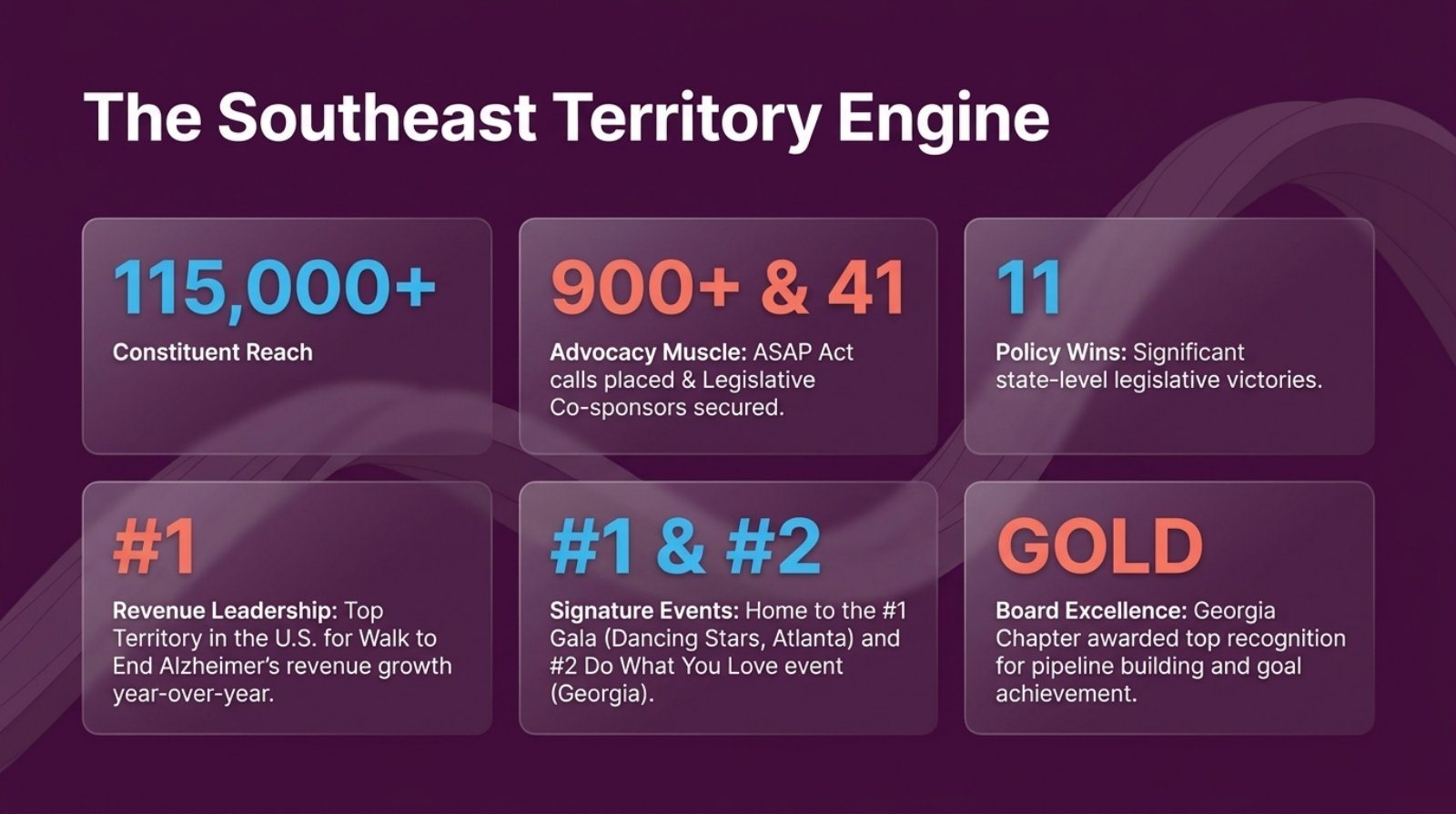
Angela Johnson, the Association’s Territorial Vice President for the Southeast, shared that advocates in this territory made more than 900 phone calls to legislators, and that there are now 41 co-sponsors for the ASAP Act from across the territory.
That is what advocacy looks like.
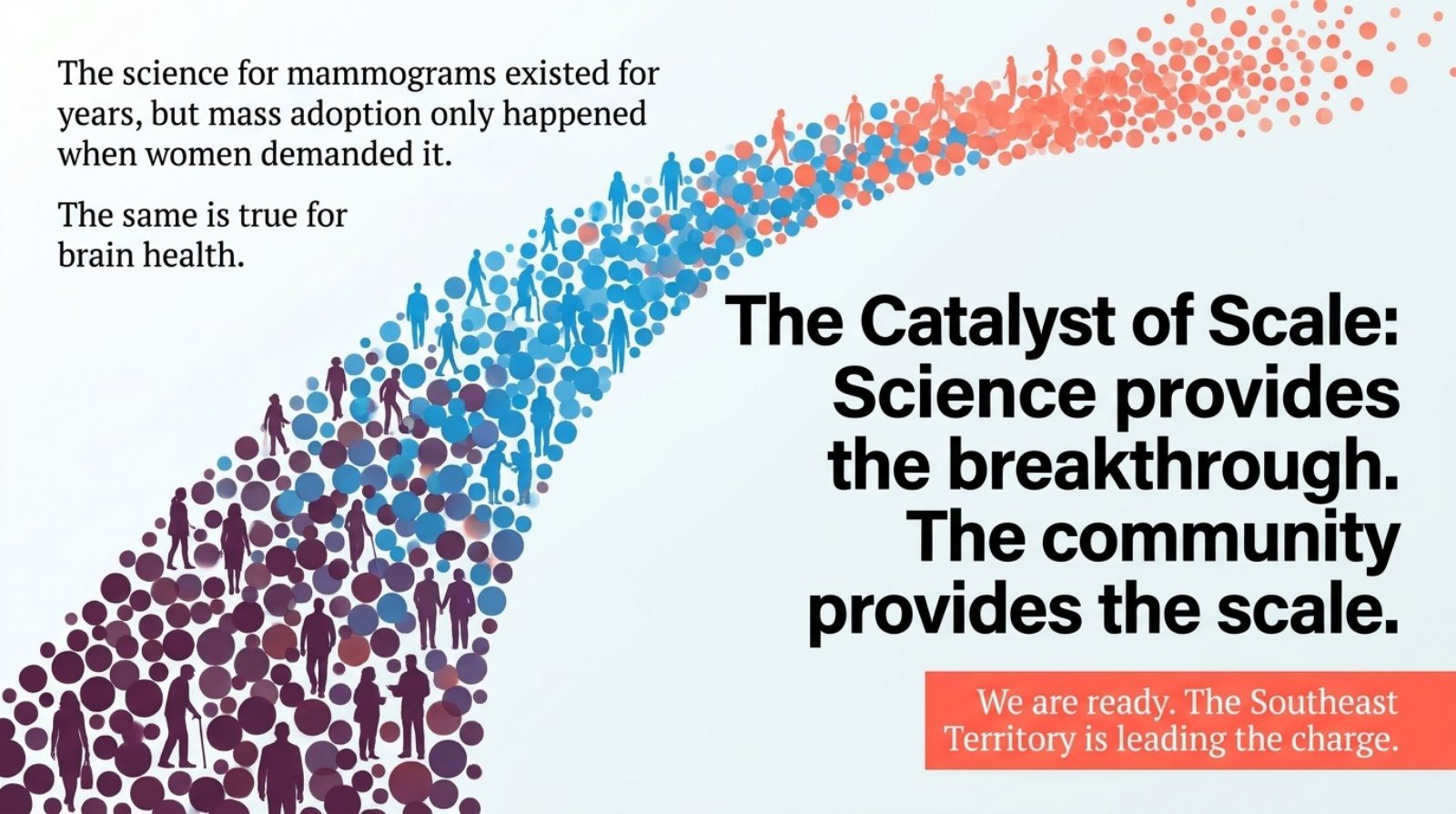
Remember the mammogram.
Donna McCullough made this point beautifully. The science for mammograms was there for a while. Mammograms became routine, she said, because women went to their doctors and said, “I want a mammogram.”
She said it is going to be the same for us.
Early detection only helps families if families ask for it.
FROM BREAKTHROUGHS TO EVERYDAY LIFE
Donna McCullough then spoke about the next challenge, which she said is really different:
“We’ve proven that we can drive breakthroughs. We’ve got to bring those breakthroughs to scale.”
And by scale, she said she does not just mean reaching more people with programs.
She means changing what actually happens in communities.
For years, she explained, the Association’s care work focused mostly on the middle and later stages of the disease.
Now, because of the science, they can reach people much earlier.
From brain health and risk reduction, to detection and diagnosis, to treatment, care and support.
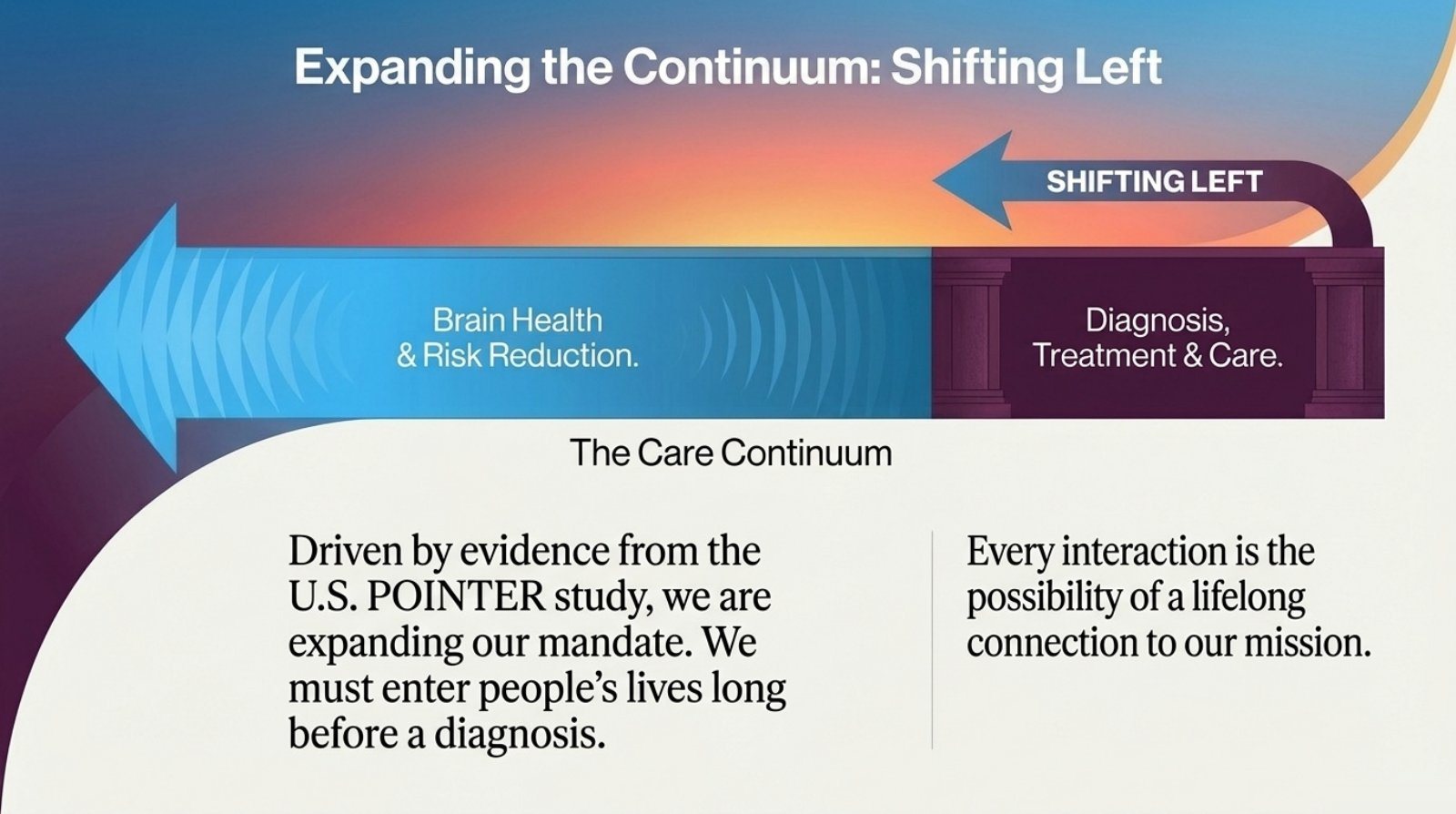
The whole journey.
RETHINK YOUR BRAIN
A big part of reaching people earlier is brain health.
Donna pointed to the U.S. POINTER study, a large clinical trial led by the Alzheimer’s Association. She said it gave them the evidence that lifestyle factors make a difference.
U.S. POINTER tested a combination of healthy diet, exercise, heart health, cognitive challenge and social engagement in older adults at higher risk, and those lifestyle interventions protected thinking and memory.
Based on that science, the Association launched (re)think your brain in May, a consumer campaign built around a 6-Step Challenge.
Donna shared that close to 40,000 people have signed up for the challenge.
And here is the part that really got me:
She said 70% of them had never had any interaction with the Alzheimer’s Association before.
These are people taking care of their brains before anything is wrong.
That is exactly what we want.
She also shared that (re)think your brain activities are being piloted at five Walk to End Alzheimer’s sites this fall, with plans to expand to all walks next year.
TRAINING THE PEOPLE WHO CARE FOR US
Here is the problem every physician knows:
There is a gap between what the science says and what actually happens in the exam room.
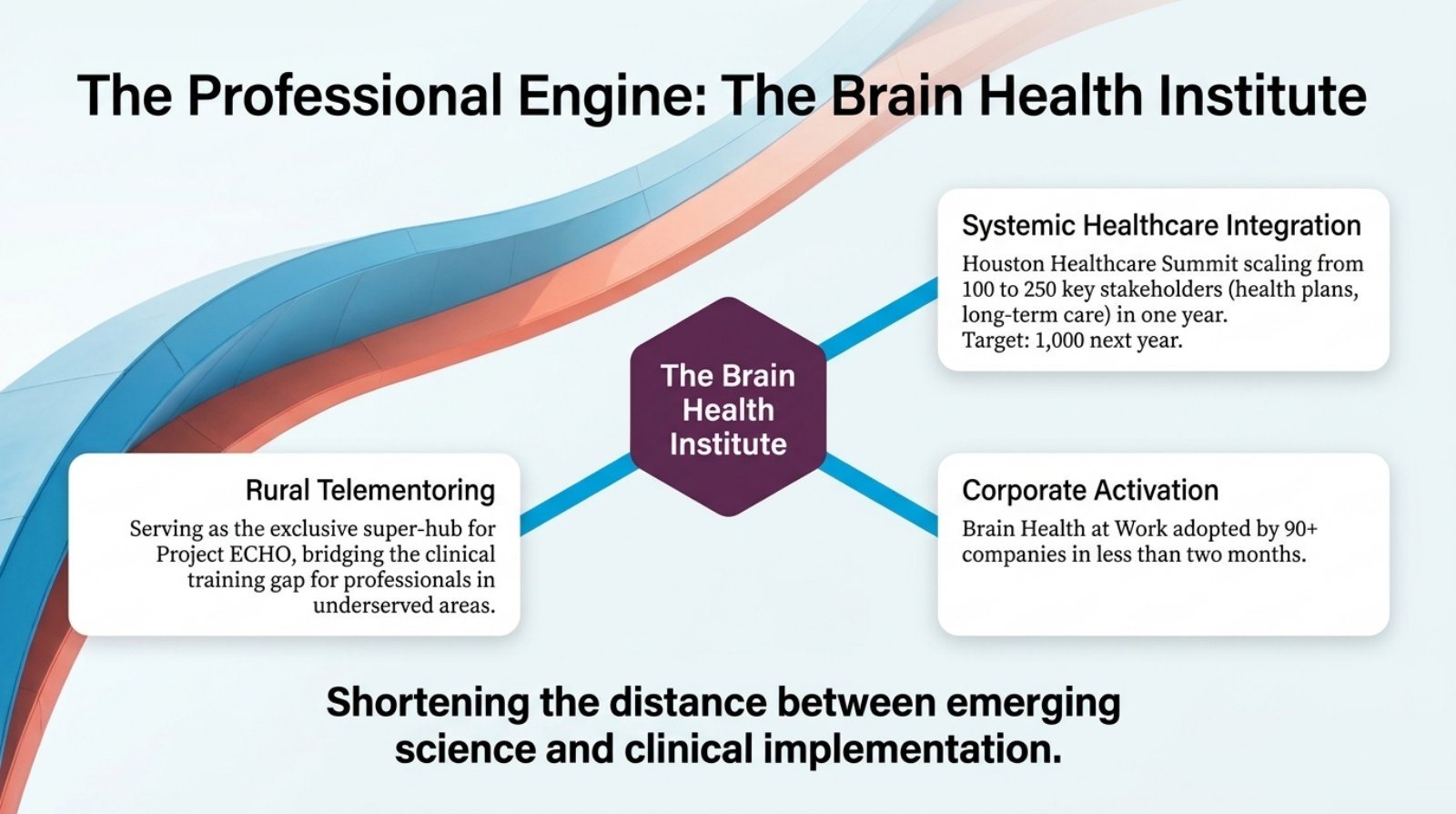
Donna said the Association’s job is to shorten that distance.
That is the role of the Association’s Brain Health Advancement Institute, which Donna described as a translation engine: it turns new science into tools and education for healthcare professionals, employers and public health leaders.
A few things she shared:
- The Association’s healthcare summit grew from 100 attendees last year to 250 this year, with a goal of 1,000 next year.
- When they piloted Brain Health at Work, they hoped for 25 companies. Ninety signed up in less than two months.
- Through Project ECHO, the Association is the world’s first ECHO Superhub for Alzheimer’s and dementia care, training clinicians through case-based tele-mentoring, including in rural areas where training can be hard to reach.
Donna said something I want every clinician to hear:
They are not successful until a professional actually changes what they do.
I agree.
WHAT I WANT CAREGIVERS TO TAKE FROM THIS
If you are a caregiver reading this, I want you to hear me clearly:
The science is moving faster than ever.
Two treatments exist that did not exist ten years ago.
Research funding has grown dramatically.
Early detection is closer to being covered by Medicare.
And the Alzheimer’s Association is now focused on preventing decline and stopping progression.
But none of it helps your family if it stays in a conference room.
So I want you to take action.
If you are noticing memory changes in yourself or someone you love, do not wait.
Talk to your doctor.
Ask what testing is appropriate.
Ask whether reversible causes have been ruled out.
Ask what support exists for the caregiver.
Take care of your own brain, too. Move your body. Eat well. Keep learning. Stay connected to people.
And use your voice. Call your members of Congress. The progress in this issue happened because ordinary people kept calling.
THE GUIDE MODEL: MEDICARE’S DEMENTIA CARE PROGRAM
Breakthroughs at scale also means families at home have real support today.
GUIDE stands for Guiding an Improved Dementia Experience.
Through the GUIDE Model, eligible families may receive structured dementia-care support through MedBetter Health.
MedBetter Health participates in this 8-year CMS initiative designed to support people living with dementia and the family caregivers caring for them at home.
Eligible beneficiaries and caregivers may receive services such as:
- A dedicated Care Navigator
- A 24/7 support line for urgent questions and concerns
- Caregiver education and training
- Personalized dementia care planning
- Connections to community resources
- Medicare-covered respite services based on eligibility and assessed need
THE NEXT STEP FOR YOUR FAMILY
If you are caring for someone living with dementia in Florida or New York, MedBetter Health may be able to support your family through the GUIDE Model.
Check eligibility here:
https://medbetterhealth.org/guide
MedBetter Health currently serves eligible families in Florida and New York only.

Common questions
Quick answers from this issue
Are We Really Doing in 5 Years What Cancer Did in 50?
“Dr. Erik, is anything actually changing with Alzheimer’s?” Families ask me this all the time. They have watched a parent forget their name.
What should caregivers try first?
Federal Alzheimer’s research funding was around $500 million when they started. It ended that 10-year vision at $3.8 billion. The Association’s own research grants grew from about $20 million a year to a total research spend of around $112.5 million. Through their work with health systems, 22.9 million people were reached with quality dementia care.
When should families call a clinician?
Call a clinician promptly if the change is sudden, severe, unsafe, tied to a fall, fever, pain, dehydration, medication change, hallucinations, paranoia, or new confusion. Call emergency services for immediate danger.