

ISSUE NO. 59 · DAILY STEPS AND BRAIN HEALTH: WHAT A YEAR OF FITNESS-TRACKER DATA SUGGESTS
"Dr. Erik, my dad barely leaves his chair anymore. Is that hurting his brain?"
"How much should I be walking to protect my own memory?"
Families ask me some version of these questions all the time.
And these days, a lot of people already have a number on their wrist: the step count on their fitness tracker.
So when new research looked at exactly that number, I paid attention.
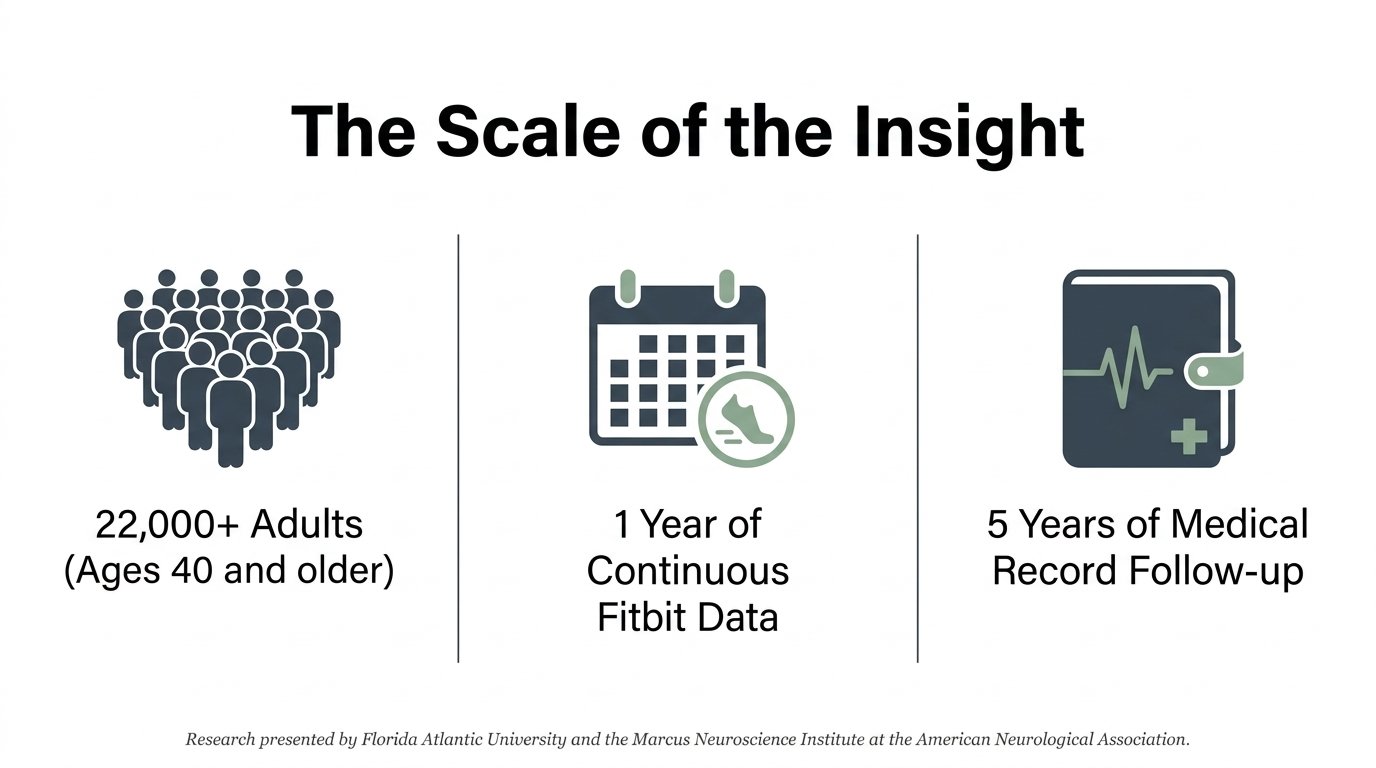
Researchers at Florida Atlantic University looked at a year of Fitbit data from more than 22,000 adults, ages 40 and older. Then they followed their medical records for about five more years.
The question was simple: does how much you move over a year say anything about your future brain health?
For those who are new here, I'm Dr. Erik Ilyayev, a dementia care physician and the CEO of MedBetterHealth.
In this issue, I'll walk you through what the study found, what it does not prove, and what your family can do with it starting today.
WHAT THE RESEARCHERS DID
The data came from the National Institutes of Health's All of Us Research Program, which makes a point of including people who have often been left out of medical research.
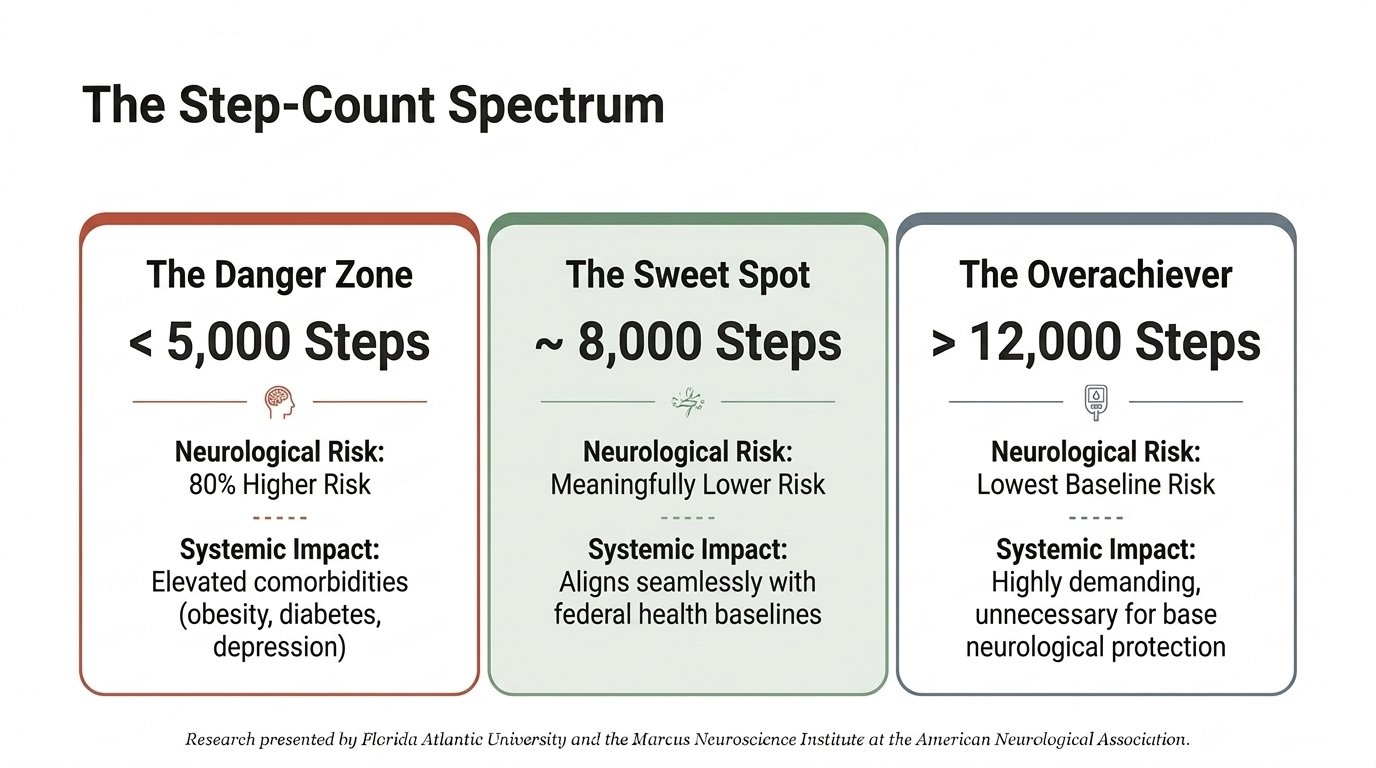
The researchers looked at 22,517 adults who had no neurological disease at the start. Then they sorted them into three groups by their typical daily steps:
• Low activity: about 4,800 steps a day
• Moderate activity: about 8,300 steps a day
• High activity: about 12,600 steps a day
One detail stood out to me. Each group's activity stayed remarkably steady from the first month of the year to the last.
That's why the researchers looked at the whole year, not one day or one questionnaire. A pattern tells you more than a snapshot.
WHAT THEY FOUND
Over about five years, 343 people were newly diagnosed with a serious neurological condition.
Now, this is important. The study counted dementia, Parkinson's disease, stroke and mini-strokes together as one outcome. It did not give a separate number for dementia alone.
The rates went up as activity went down:
• About 2.1 new diagnoses per 1,000 people each year in the most active group
• About 2.7 per 1,000 in the moderate group
• About 3.8 per 1,000 in the least active group
That works out to about an 80% higher rate in people averaging fewer than 5,000 steps a day, compared with people averaging more than 12,000.
And here's the good news. People averaging around 8,000 steps a day also had lower rates than the least active group.
IT'S NOT JUST THE STEPS
Okay, so here's the part I want every family to understand.
The least active group was also more likely to have other health problems:
- Diabetes: 5.6% in the least active group, compared with 2.0% in the most active group
- High blood pressure: 13.4%, compared with 9.2%
- Depression: 8.6%, compared with 3.1%
- Average body mass index (BMI): 32.1, compared with 26.5
When the researchers took these conditions into account, the link between low steps and brain disease got weaker. It was small enough at that point that it could have been chance.
So to me, low activity looks like one part of a bigger health picture.
Depression stood out as the single strongest predictor of later neurological disease. The researchers also pointed out that depression can be an early symptom of dementia and Parkinson's disease.
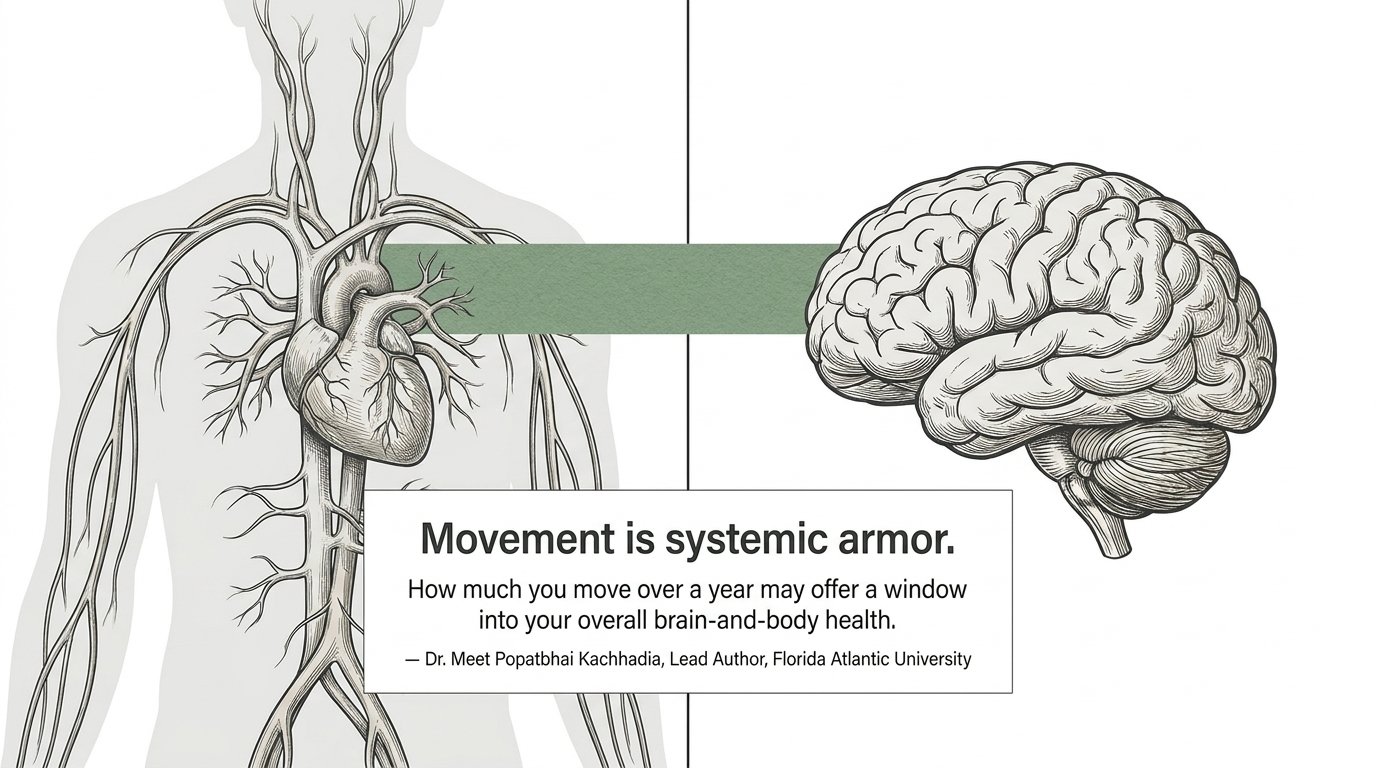
The study's lead author, Dr. Meet Popatbhai Kachhadia, put it well:
"Low activity and conditions such as obesity, diabetes, high blood pressure and depression are a package deal, part of a broader health picture."
Then he added the hopeful part. These are "all health concerns that we know how to address."
As a physician, I agree completely. Blood pressure, blood sugar, weight and mood are things we can check and treat.
WHAT THIS STUDY DOES NOT SAY
I want to be careful here, because headlines often aren't.
This study shows a link. It does not prove that walking more prevents dementia.
It was presented at the American Neurological Association's annual meeting. Research presented at a meeting is considered preliminary until it's published.
The researchers themselves said more studies are needed, including on the type and intensity of activity.
And a low step count is not a diagnosis.
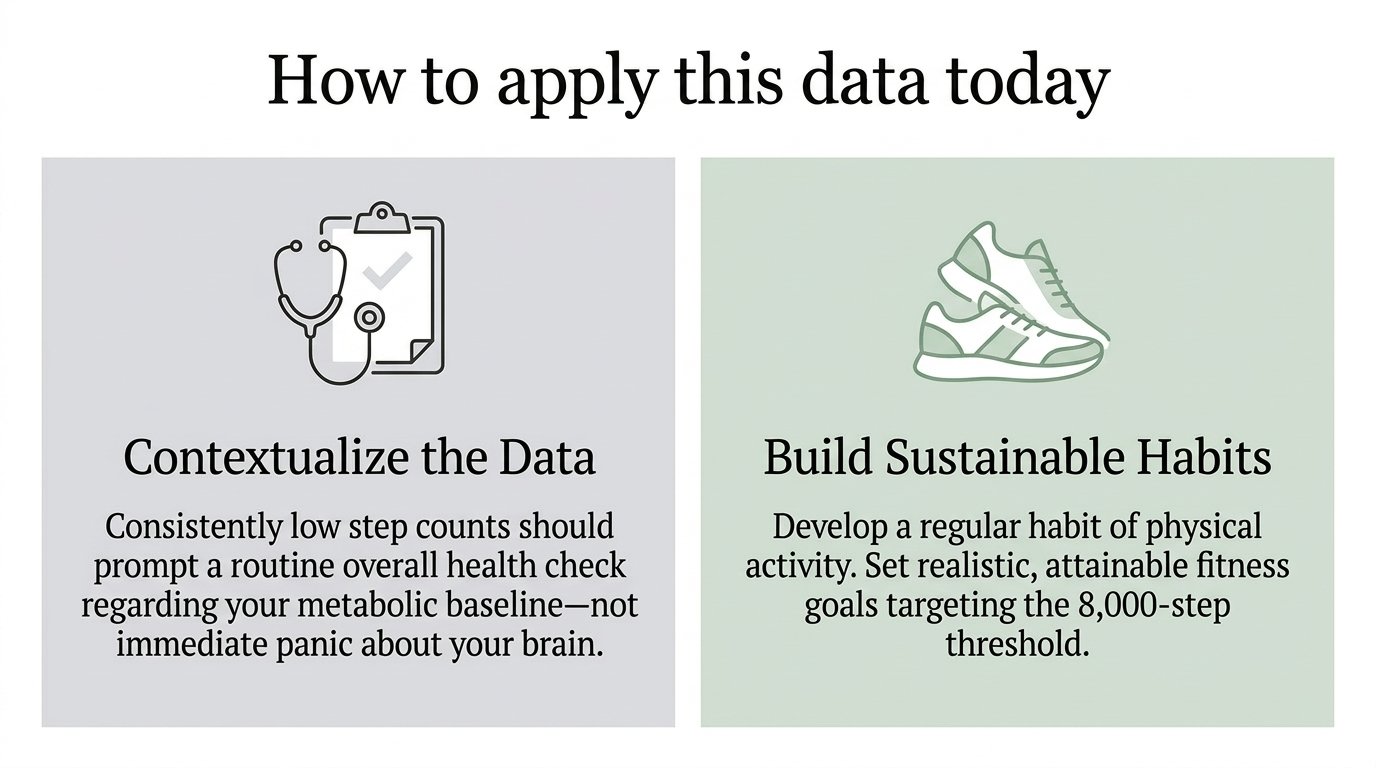
Dr. Kachhadia said that if your step count stays low over a year, treat it as a prompt to get your health checked, not as a verdict about your brain.
That's exactly how I'd put it to a patient.
YOU DON'T NEED 12,000 STEPS
Honestly, this is my favorite part of the study.
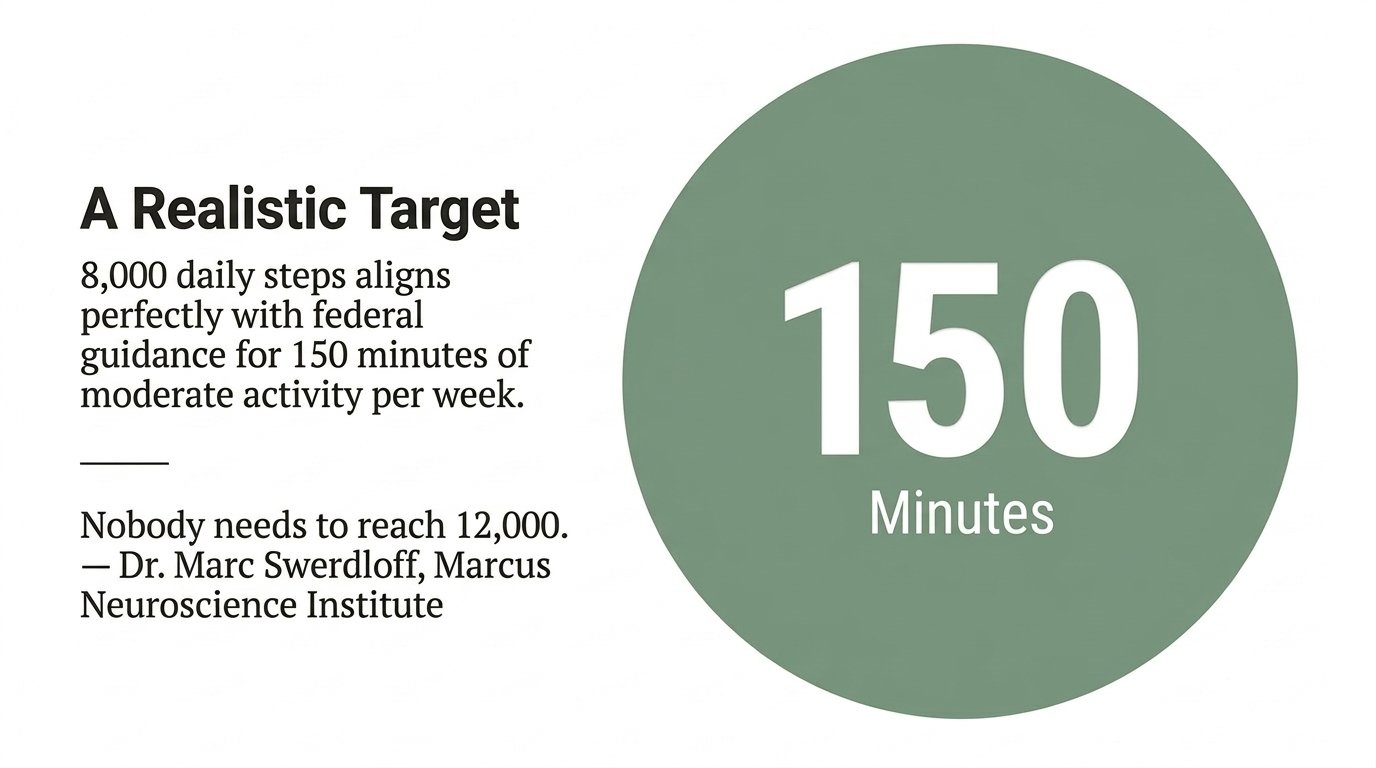
Dr. Marc Swerdloff, a co-author from Florida Atlantic University and the Marcus Neuroscience Institute, said people averaging around 8,000 steps a day "had meaningfully lower rates of neurologic disease than the least active group. That's a realistic target, and it aligns with federal guidance of roughly 150 minutes of moderate activity per week. Nobody needs to reach 12,000."
Nobody needs to reach 12,000.
For a lot of the families I work with, that's a relief. The goal is steady, realistic movement, not a marathon.
WHAT I WANT CAREGIVERS TO TAKE FROM THIS
If you're caring for someone, or you're worried about your own brain health, here's my advice:
1. Look at the pattern, not one day. If you or your loved one wears a tracker, check the average over weeks and months.
2. If steps stay low month after month, book a checkup. Ask about blood pressure, blood sugar, weight and mood.
3. Take low mood seriously. Depression was the strongest predictor in this study, and it can also be an early sign of memory changes. Tell the doctor.
4. Aim for realistic. Around 8,000 steps a day, or roughly 150 minutes of moderate activity a week, is the target the researchers called realistic.
5. Build it into the day. A short walk after meals, a loop around the house or a walk together all count. Ask the doctor what's safe for your loved one.
6. Move with them. Walking together helps the person you care for, and it helps you too.
Dr. Swerdloff's advice is simple: "Everybody should develop a regular habit of physical activity, setting realistic, sustainable fitness goals to improve their health."
Small steps, every day. And a doctor in your corner when the numbers change.
YOU DON'T HAVE TO DO THIS ALONE
And look, if you're taking care of someone with dementia, staying active is only one piece. You also need real support at home, today.
Medicare has a newer program for families living with dementia called GUIDE, and here at MedBetterHealth, that's exactly what we help with.
Eligible beneficiaries and caregivers may receive services such as:
- A dedicated Care Navigator
- A 24/7 support line for urgent questions and concerns
- Caregiver education and training
- Personalized dementia care planning
- Connections to community resources
- Medicare-covered respite services based on eligibility and assessed need. Respite means a trained caregiver stays with your loved one so you can take a break.
Check eligibility here:
https://guide.medbetterhealth.org/news
Or comment “GUIDE” below and we’ll send you the link to check eligibility.
For more dementia-care education, visit:
You can also subscribe to Straight Talk with Dr. Erik for practical dementia-care education:
https://www.youtube.com/@ErikIlyayev
This is education, not medical advice. Alzheimer’s testing, diagnosis, treatment options, brain health and care planning should be discussed with a qualified healthcare professional.
Thank you for reading The Dementia Times.
With gratitude,
Dr. Erik Ilyayev, MD
CEO, MedBetter Health
━━━━━━━━━━━━━━━━━━━━━━━━━━━━━━
A NOTE FOR HEALTHCARE & HOME CARE PROFESSIONALS
If you work in home care, geriatrics, elder law, neurology, nursing, assisted living, adult day care, care management, behavioral health, primary care, hospital discharge planning, respite care, senior living, occupational therapy, or any field supporting dementia families — I would love to have you on my podcast, Straight Talk with Dr. Erik.
I’m always looking for professionals with real frontline experience and meaningful insight into dementia care and caregiver support.
If that sounds like you, let’s connect.
Florida Trend Media Company
Alzheimer's Foundation of America
South Florida Business Journal
Florida Department of Elder Affairs
Aging with Dignity
American Society on Aging
Family Caregiver Alliance / National Center on Caregiving
AARP
USF Health Byrd Alzheimer's Institute

Common questions
Quick answers from this issue
How Many Steps a Day Does Your Brain Really Need?
"Dr. Erik, my dad barely leaves his chair anymore. Is that hurting his brain?" "How much should I be walking to protect my own memory?" Families ask me some version of these questions all the time.
What should caregivers try first?
Diabetes: 5.6% in the least active group, compared with 2.0% in the most active group High blood pressure: 13.4%, compared with 9.2% Depression: 8.6%, compared with 3.1%
When should families call a clinician?
Call a clinician promptly if the change is sudden, severe, unsafe, tied to a fall, fever, pain, dehydration, medication change, hallucinations, paranoia, or new confusion. Call emergency services for immediate danger.