

From Guesswork to Bloodwork
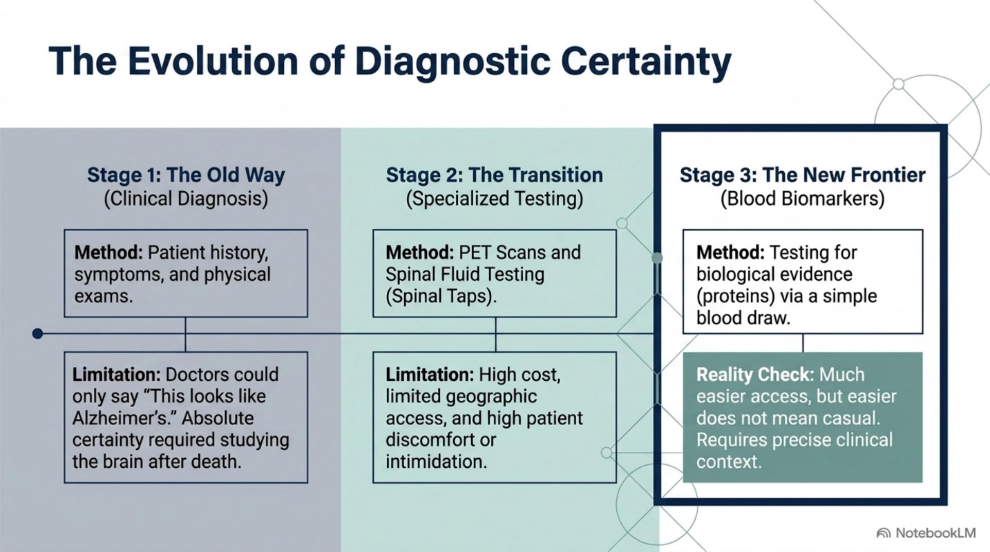
For most of Dr. Galvin's career, Alzheimer's disease was a clinical diagnosis. A physician would compare a patient's history and symptoms against published criteria and make the best call possible, without ever truly knowing whether that call was correct until an autopsy confirmed it after death.
Specialized imaging and spinal fluid testing changed that. PET scans and spinal taps could finally show Alzheimer's related changes in a living brain. But PET scanners cluster in places like South Florida and Boston and are scarce across much of the rest of the country, and few patients look forward to a spinal tap.
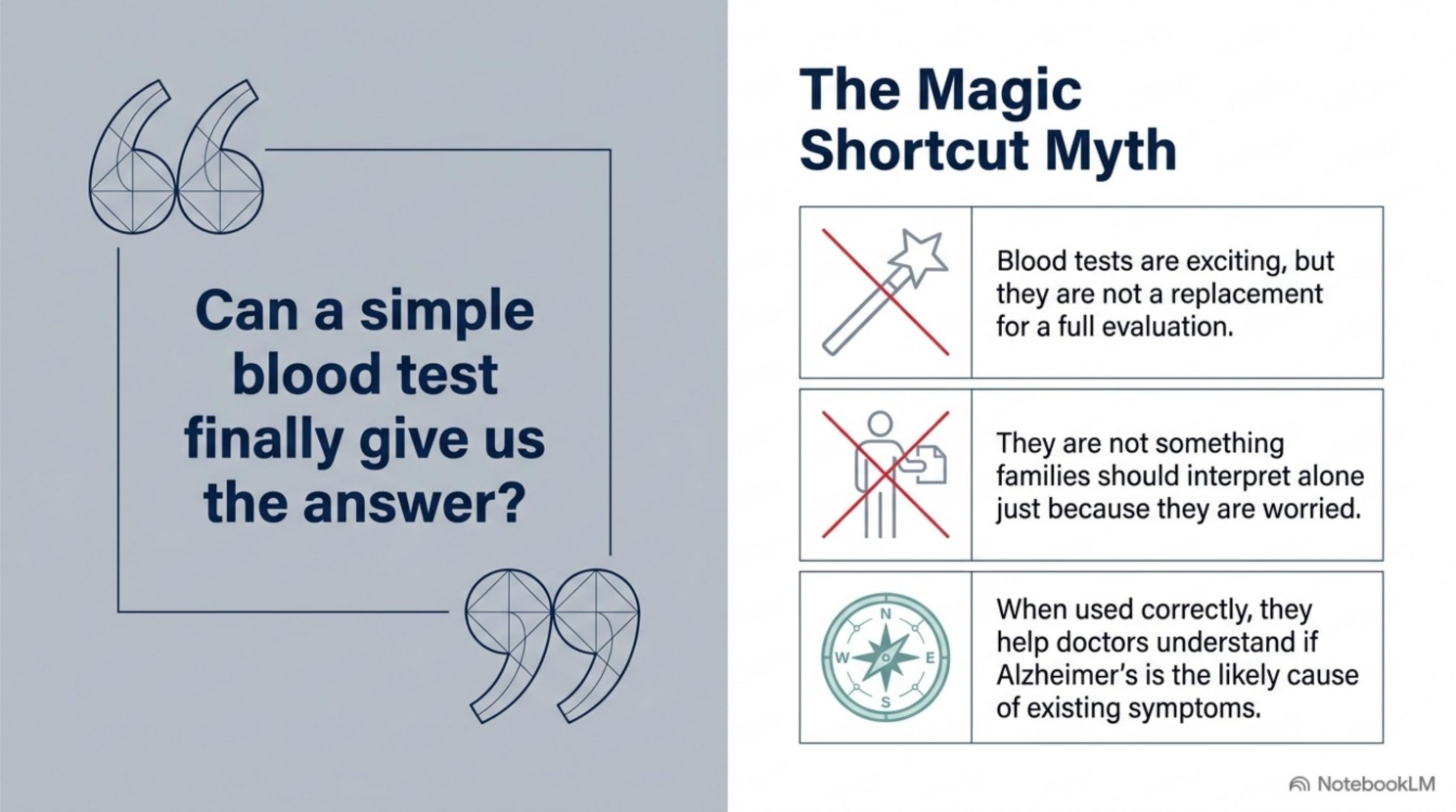
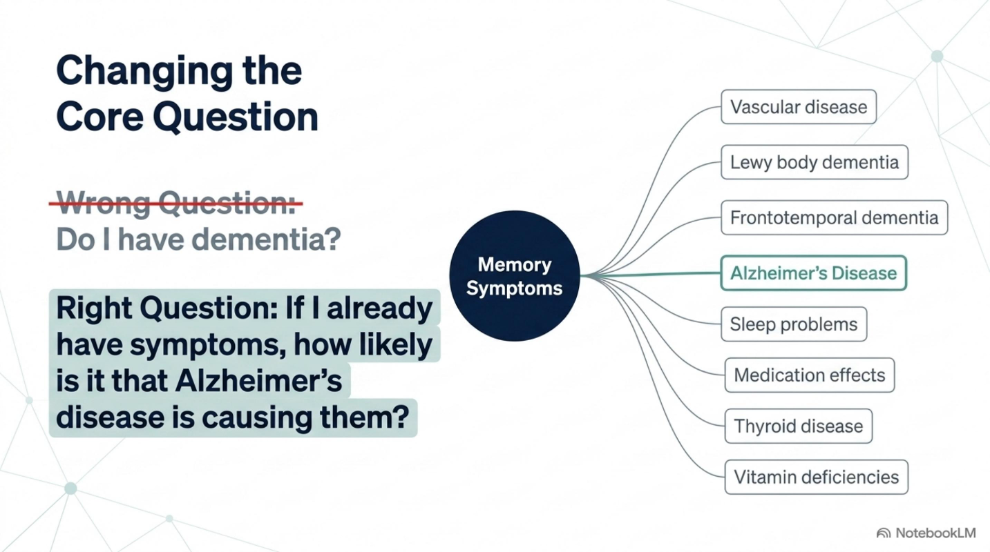
Blood tests are the newest chapter, and according to Dr. Galvin, they are already changing how medicine is practiced. Two blood based biomarker tests have now received FDA clearance, which opens the door to potential Medicare coverage. In plain terms, what they measure is how likely it is that a patient's existing symptoms are being caused by Alzheimer's disease
The Full Clinical Picture
Here is how it plays out in a real exam room. A patient tells Dr. Galvin they cannot explain why they keep forgetting things. He runs a Mini Cog or a MoCA, the short cognitive screening tools used across primary care and neurology. If something looks off, the next step is a blood test, not the first one.
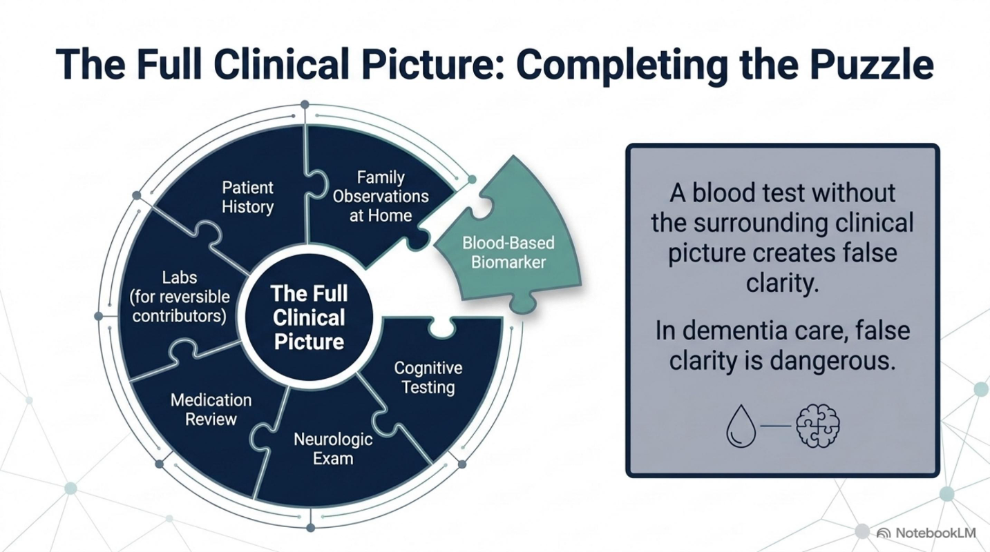
That order matters. A blood based biomarker is a powerful new piece of the puzzle, but it was never meant to replace patient history, family observations at home, a medication review, a neurologic exam, or cognitive testing.
"A blood test without the surrounding clinical picture creates false clarity. In dementia care, false clarity is dangerous." — Dr. James Galvin
Two Tests, Two Jobs: Ruling Out and Ruling In
There are currently two blood based tests in clinical use, and they serve very different purposes.
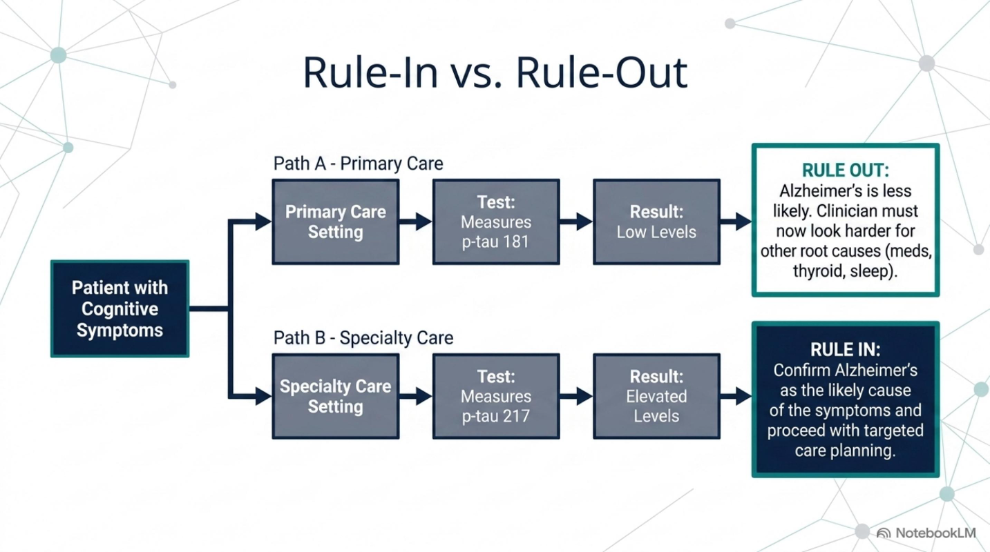
The first, approved for primary care, measures a protein called phosphorylated tau 181 (p tau 181). If a symptomatic patient's level comes back low, Alzheimer's disease is effectively ruled out , which tells the clinician to keep looking for what else could be behind the memory changes, whether that is medication, thyroid disease, sleep problems, or something else entirely.
The second, approved for specialty care settings like neurology, measures a ratio of phosphorylated tau 217 (p tau 217) to amyloid protein. When that ratio is elevated in a symptomatic patient, it rules in Alzheimer's disease as the likely cause of their symptoms.
One test rules out. One test rules in. Both exist to answer a question about a patient who already has symptoms, not to screen someone who feels fine.
Symptoms First: Why the Mammogram Comparison Only Goes So Far
Dr. Galvin draws a hard line here. These tests are designed to be used only when a patient already has symptoms. They were never built as a general screening tool for the public, and that distinction shapes everything about how they should be used.
Inside the Alzheimer's Association, advocates have started calling this a mammogram moment, a reference to the widespread access blood testing could someday bring to Alzheimer's detection. Dr. Galvin pushes back gently on the comparison. A mammogram is offered to asymptomatic women once they reach a certain age, precisely because the goal is to catch disease before any signs appear. Alzheimer's blood biomarkers work the opposite way. They are for patients who already have memory changes or cognitive decline, and the goal is determining whether Alzheimer's is the cause, not searching for it in someone with no symptoms at all.
People without symptoms should not be getting these blood tests in a clinical setting. In a research setting, that is a different conversation. In the exam room, the rule holds.
The Danger of the Void: Why 'Just Knowing' Is Risky
Why does that line matter so much? Dr. Galvin points to two real world consequences of testing before symptoms appear.
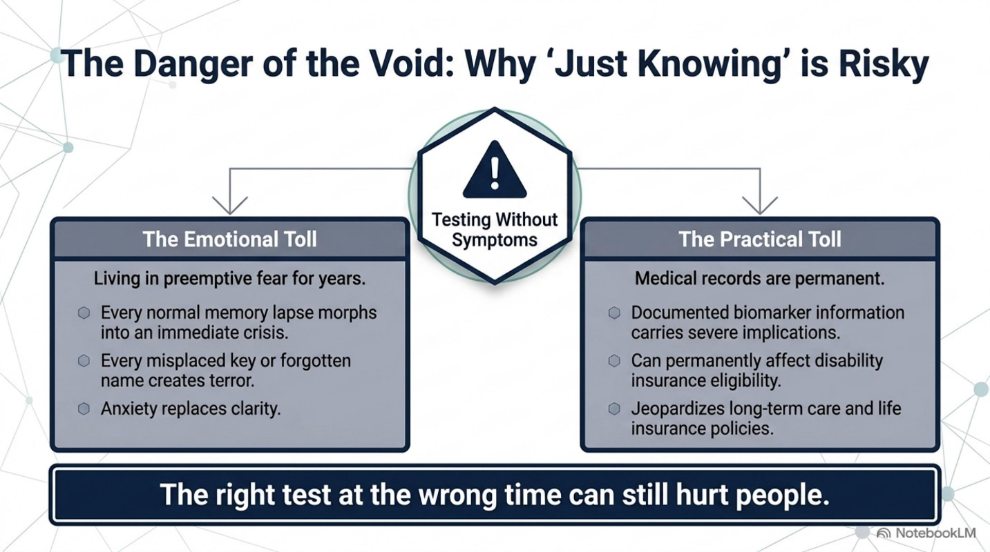
The first is emotional. Someone can carry Alzheimer's related brain changes for years and never develop symptoms at all. Screen that person anyway, and you hand them a lifetime of low grade fear. Every misplaced key and every forgotten name stops being ordinary and starts feeling like a crisis.
The second is practical, and arguably more serious. Unlike genetic testing, there is currently no law protecting people from discrimination based on a blood based biomarker result. An asymptomatic person who tests positive, with that result entered into the medical record, can become uninsurable for disability coverage and long term care insurance. The result can also affect life insurance and medical insurance, since it now reads as a pre existing condition. As health information exchanges expand, Dr. Galvin warns, that kind of data becomes even easier for insurers to find.
Beyond the Blood Test: Turning a Diagnosis Into a Path Forward
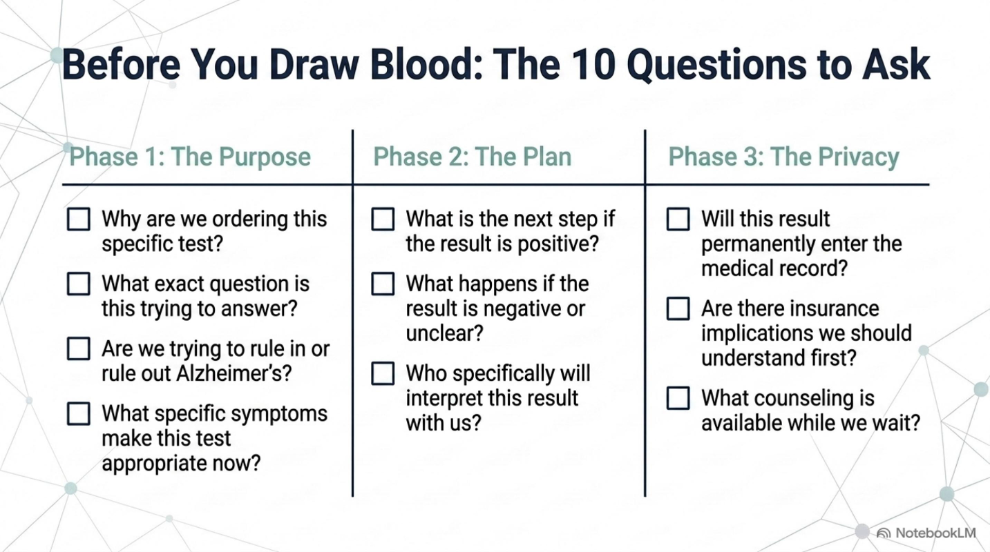
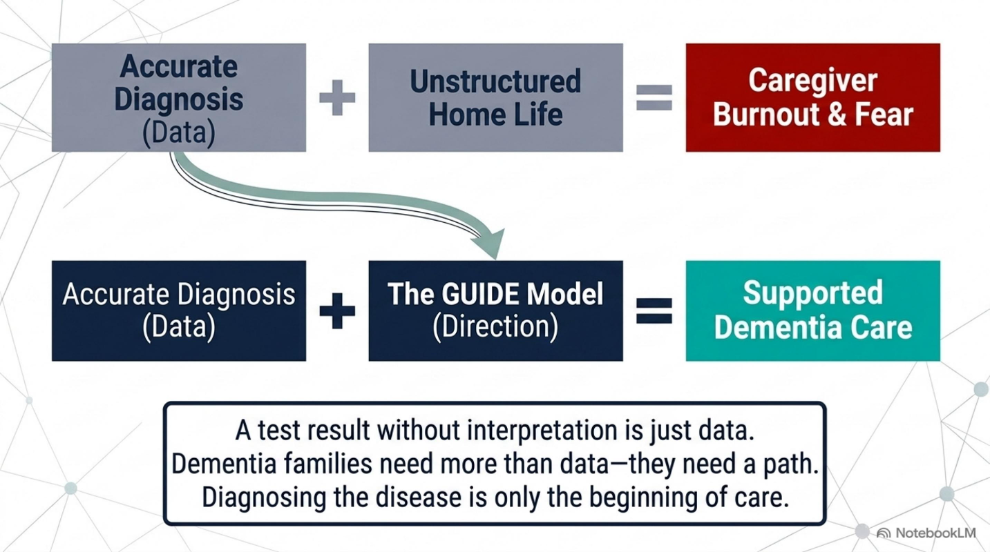
An accurate diagnosis is only half the equation. Dr. Erik closes the conversation with the point that matters most to the families MedBetterHealth serves every day: a test result without interpretation is just data, and dementia families need more than data. They need a path.
Pair an accurate diagnosis with unstructured home life, and the result is caregiver burnout and fear. Pair that same accurate diagnosis with the CMS GUIDE Model, Guiding an Improved Dementia Experience, and the result is supported dementia care.
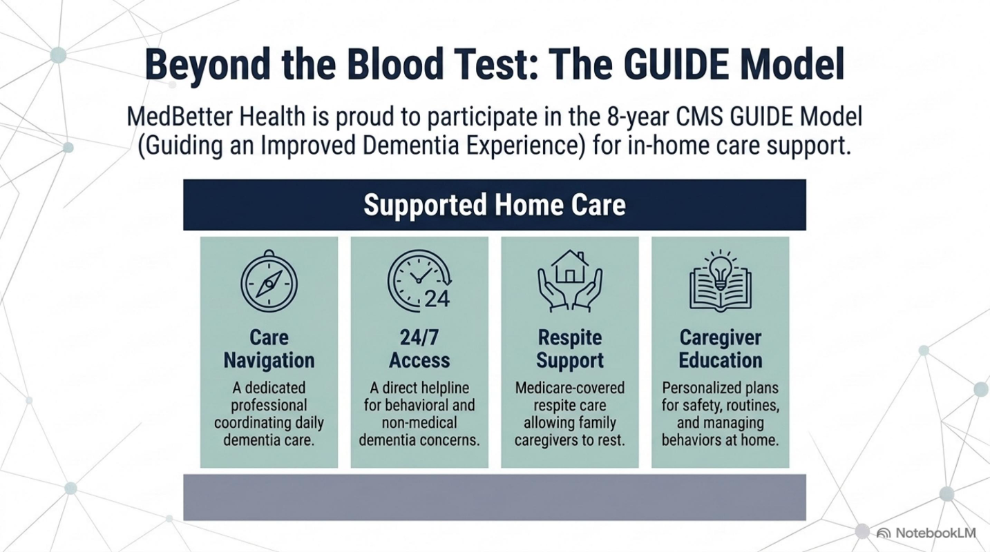
That is exactly what MedBetterHealth's eight year CMS GUIDE Model program is built to deliver: a dedicated care navigator coordinating daily dementia care, a 24/7 helpline for behavioral and non medical concerns, Medicare covered respite care so family caregivers can rest, and personalized caregiver education covering safety, routines, and managing behaviors at home.
You do not have to imagine a world where caring for a loved one with dementia does not mean doing it alone, or where 24/7 support is simply part of the plan. That world is already here, and it is covered by Medicare.

Common questions
Quick answers from this issue
The Missing Piece, Not the Whole Puzzle: The Clinical Reality of Alzheimer's Blood-Based Biomarkers
From Guesswork to Bloodwork For most of Dr. Galvin's career, Alzheimer's disease was a clinical diagnosis. A physician would compare a patient's history and symptoms against published criteria and make the best call possible, without ever truly knowing whether that call was correct until an autopsy confirmed it after death. Specialized imaging and spinal fluid testing changed that.
What should caregivers try first?
Write down what changed, when it started, and what was happening right before it. Reduce noise, slow the conversation down, and use one simple step at a time. Share the pattern with the family, care team, or clinician so everyone responds consistently.
When should families call a clinician?
Call a clinician promptly if the change is sudden, severe, unsafe, tied to a fall, fever, pain, dehydration, medication change, hallucinations, paranoia, or new confusion. Call emergency services for immediate danger.