

"She's Just Getting Older." — How Often Are We Wrong?
Every week, I sit across from families who say the same thing: "We thought it was normal aging. We thought she was just being forgetful." Sometimes they're right. But far too often, what they're describing — the missed appointments, the repeated questions, the confusion over a checkbook that used to be second nature — isn't just forgetfulness. It's dementia. And the longer it goes unrecognized, the harder it becomes for everyone.
My name is Dr. Erik Ilyayev. I'm a dementia care physician, a board member of the South Florida Alzheimer's Association, and the CEO of MedBetter Health — one of the organizations selected by Medicare to participate in a groundbreaking new program designed to change how America cares for people living with dementia.
In this issue, I want to share something I explain to every patient's family: what dementia actually is, why it's so dramatically underdiagnosed, and what you can do right now if you suspect someone you love is living with it.
THE SCALE OF THE PROBLEM
The Numbers That Should Alarm All of Us
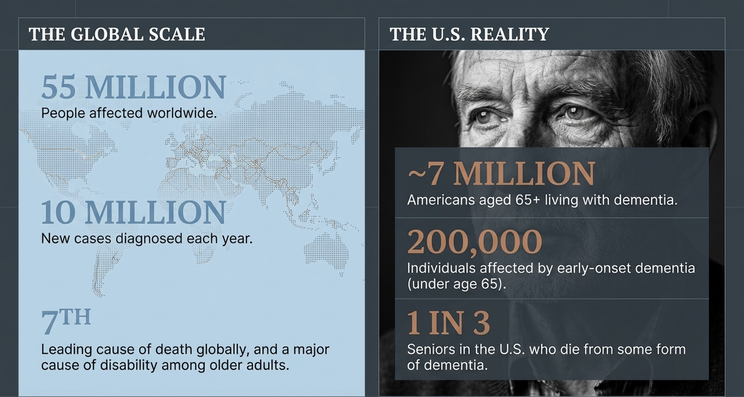
Here's a fact that stops most people in their tracks: when researchers asked physicians and nurse practitioners whether they feel confident diagnosing dementia, 4 in 10 said no. That's not a criticism — dementia is genuinely hard to diagnose. But it means the real number of people living with it is likely closer to 10 to 12 million Americans, not 7 million.
And behind every number is a caregiver — a daughter, a son, a spouse — doing their best without nearly enough support.
THE CLINICAL PICTURE
What Dementia Actually Is — In Plain English
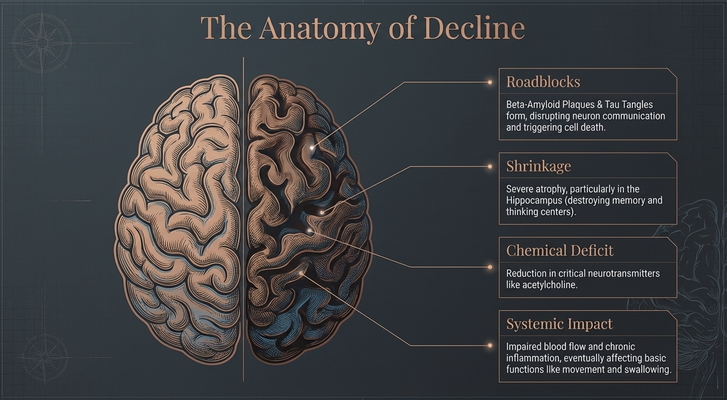
Dementia is not one disease. It's a broad term for a group of conditions that all share three core features:
Loss of the ability to think clearly.Processing information, making decisions, understanding conversations — all become increasingly difficult. Memory loss that disrupts daily life.Not just forgetting a name — forgetting conversations that happened an hour ago, or experiences that should be clearly remembered. Loss of independent function. The person who used to manage their finances, cook their meals, and run their household now needs someone else to do those things for them.
"When mom can no longer manage her checkbook or get to the grocery store on her own — that's not just aging. That's a clinical change that deserves clinical attention."
Beyond these three pillars, dementia affects memory, language, the ability to learn new information, executive function, social cognition, attention, and judgment — often long before a family realizes something is wrong.
KNOW THE DIFFERENCE
Not All Dementias Are the Same
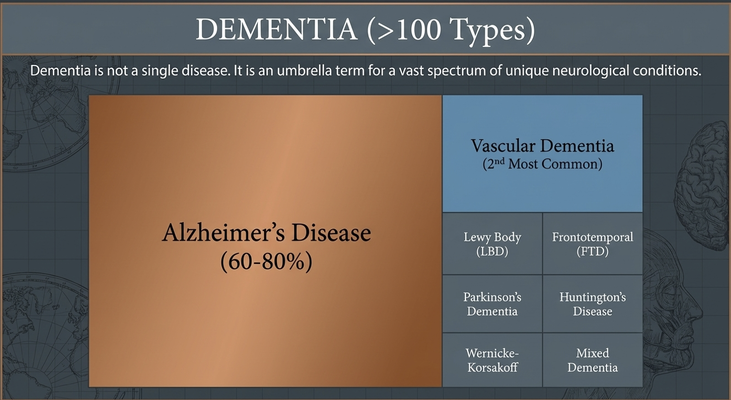
There are over 100 types of dementia. Each has its own trajectory, symptoms, and care needs. Here are the most common:
Alzheimer's Disease (60–80% of cases) — The most common form. Characterized by amyloid plaques in the brain that progressively damage memory, thinking, and eventually motor function. Vascular Dementia — Caused by reduced blood flow to the brain, often following strokes. Function declines in steps, each tied to a vascular event. Lewy Body Dementia — Associated with Parkinson's symptoms and hallucinations. Often misdiagnosed for years. Frontotemporal Dementia (FTD) — Affects the front and sides of the brain, causing personality changes, impulsive behavior, and social inappropriateness — not primarily memory loss. Parkinson's Dementia — Motor symptoms (tremor, rigidity, masked expression) combined with cognitive decline.
Knowing which type of dementia your loved one has isn't academic — it determines what treatments are appropriate, how the disease will progress, and what kind of care support is needed.

Common questions
Quick answers from this issue
What is Dementia?
"She's Just Getting Older." — How Often Are We Wrong? Every week, I sit across from families who say the same thing: "We thought it was normal aging. We thought she was just being forgetful." Sometimes they're right. But far too often, what they're describing — the missed appointments, the repeated questions, the confusion over a checkbook that used to be second nature — isn't just forgetfulness. It's dementia.
What should caregivers try first?
Write down what changed, when it started, and what was happening right before it. Reduce noise, slow the conversation down, and use one simple step at a time. Share the pattern with the family, care team, or clinician so everyone responds consistently.
When should families call a clinician?
Call a clinician promptly if the change is sudden, severe, unsafe, tied to a fall, fever, pain, dehydration, medication change, hallucinations, paranoia, or new confusion. Call emergency services for immediate danger.